
Have you ever tasted something that feels like a warm hug in a cup? If you’ve ever wandered through the narrow, sun-drenched alleys of Hanoi, you’ve likely stumbled upon a scent that is both intensely earthy and heavenly sweet. That is the aroma of Vietnamese Egg Coffee (Cà Phê Trứng)—a legendary drink that looks like a latte, tastes like a tiramisu, and carries the soul of Vietnam’s capital.
In this comprehensive guide, we’ll take a deep dive into the "liquid gold" of Hanoi. Whether you are a curious traveler or a home barista, you’re about to master the art of the perfect egg foam.
1. What Exactly is Vietnamese Egg Coffee?
To the uninitiated, the idea of putting a raw egg in coffee might sound... unusual. Some might even ask, "Does it taste fishy?"
The short answer: Absolutely not.
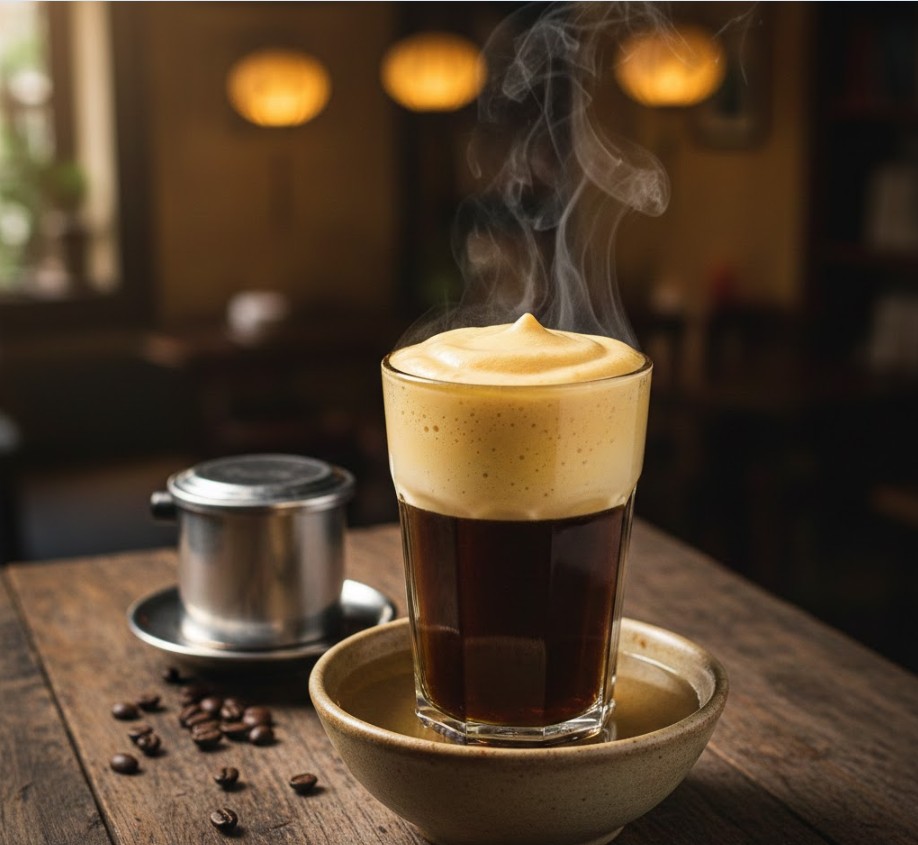
Vietnamese Egg Coffee is a decadent combination of intense, dark-roasted Robusta coffee topped with a thick, airy, and creamy foam made from egg yolks and condensed milk. The result is a beautiful contrast of bitterness and sweetness, heat and silkiness. It’s more of a liquid dessert than a standard morning pick-me-me-up.
2. A Fascinating History: From Scarcity to Specialty
The story of Egg Coffee is a testament to Vietnamese creativity. It was born in 1946 at the legendary Cafe Giảng.
During the First Indochina War, fresh milk was a luxury that was hard to find in Hanoi. Mr. Nguyen Van Giang, who was working as a bartender at the famous Metropole Hotel at the time, decided to whisk egg yolks as a substitute for milk.
What started as a clever solution to a shortage became an instant sensation. Today, it stands as a cultural icon, proving that even in times of hardship, the Vietnamese spirit finds a way to create beauty (and deliciousness).
3. The Components: Choosing the Right Ingredients
To achieve a 3000-word-quality brew at home or in your shop, you cannot settle for mediocre ingredients.
The Coffee: Why Robusta?
While the world often praises Arabica for its acidity, Robusta is the king of Vietnamese coffee. It has double the caffeine and a bold, nutty, and slightly chocolatey profile. This strength is necessary to "cut through" the richness of the egg cream.
The Eggs: Freshness is Key
Always use the freshest eggs possible. In Vietnam, we prefer "Gà Ta" (free-range chicken) eggs for their bright orange yolks, which provide a richer color and a more velvety texture.
The Sweeteners
-
Condensed Milk: This provides the classic Vietnamese sweetness.
-
A Secret Touch: Many top-tier baristas add a drop of vanilla extract or a pinch of salt to balance the richness.
4. Step-by-Step Guide: The Master Recipe
Step 1: Brew the Base
Use a Vietnamese Phin Filter.
-
Add 3 tablespoons of ground Robusta coffee.
-
Press the filter lightly.
-
Pour a small amount of hot water ($90^\circ C - 96^\circ C$) to let the coffee "bloom" for 30 seconds.
-
Fill the rest with hot water and wait for the slow, rhythmic drip.
Step 2: Create the Egg Cream (The Heart of the Drink)
This is where the magic happens.
-
Separate 2 egg yolks (ensure no whites remain, as whites cause the "fishy" smell).
-
Add 2 tablespoons of condensed milk and 1 teaspoon of honey (optional).
-
The Whisking: Use an electric hand mixer. Whisk at high speed for 3–5 minutes until the mixture turns pale yellow and doubles in volume. It should have "stiff peaks" like a meringue.
Step 3: The Assembly
Pour your hot coffee into a glass. Then, gently pour the egg cream on top. Because the foam is lighter, it will sit elegantly on the surface, creating two distinct layers.
Step 4: The Finishing Touch (The Warm Bath)
In Hanoi, we always serve the glass in a small bowl of hot water. This keeps the coffee hot and ensures the egg cream remains fluffy and cooked by the residual heat.
5. Pro-Tips: How to Avoid Common Mistakes
-
The "Fishy" Smell: This happens if the eggs aren't fresh or if you don't whisk them long enough. Adding a drop of rum or vanilla can also eliminate any lingering scent.
-
The Temperature: Never use boiling water ($100^\circ C$) directly on the egg cream, or it might curdle. Stick to the "hot bath" method.
-
The Ratio: A 1:1 ratio of coffee to cream is generally preferred for the perfect balance.
6. How to Drink It Like a Hanoian
Don't just stir it all up! To truly appreciate the layers:
-
Use a small spoon to taste the creamy top layer first.
-
Slowly dip the spoon deeper to get a bit of the bitter coffee.
-
Once you reach the halfway point, give it a gentle stir to marry the flavors together.
7. More Than Just a Drink
Vietnamese Egg Coffee is a bridge between the past and the present. It represents the resilience of Hanoi and the sophistication of its people.
Are you ready to try it? If you’re in town, drop by our restaurant for a cup of "Liquid Gold" made with our secret family recipe. We promise it’s an experience you’ll never forget.
Have you tried making Egg Coffee at home? Share your results in the comments below or tag us in your photos!